Gasp, AMTRAK?
Long-distance trains typically require overnight stays on board, which makes (zero waste) meals a bit of a headache. (Well, until we can have good things and High Speed Rail becomes a reality)
Although meals are available on the train, they are quite expensive. Since we were aiming for a zero-waste trip, buying ready-made food always involves packaging and containers. So, we brainstormed ways to tackle this meal-planning issue.
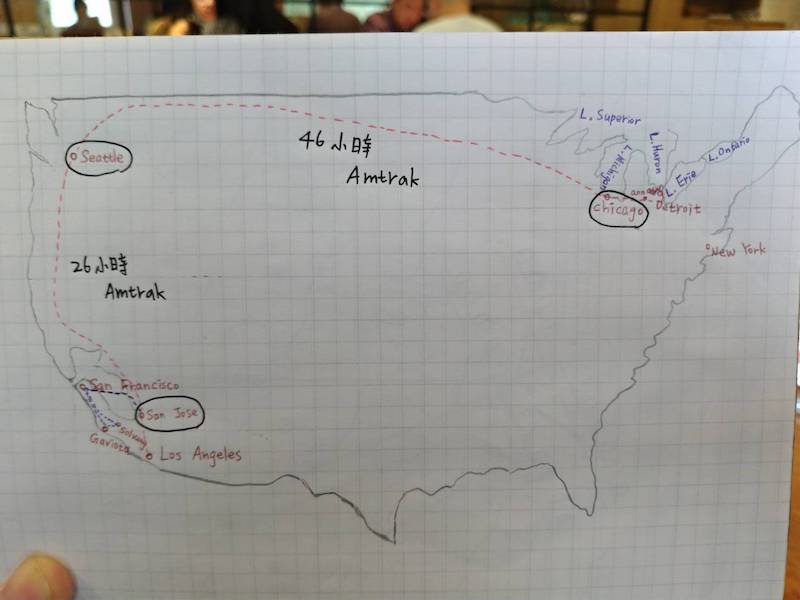
We took two train routes in total:
-
San Jose → Seattle (26 hours), one overnight.
-
Seattle → Chicago (46 hours), two overnights.
This article focuses on “zero-waste meals”; for our travel experience with Amtrak, please click the link below:
We chose the train because it’s more energy-efficient and comfortable (You can walk around, or book a sleeper cabin!) . Planes produce a lot of CO2, and I also don’t enjoy being stuck in a cramped plane cabin.
While the schedule didn’t seem too long (we initially thought a zero-waste meal plan would be easy!), we had to prepare enough food for two people, including a proper mix of carbs, fiber, protein, etc, which turned out to be quite a challenge. (Yeah can't feast on potato chips.. Not Zero Waste either oops)
In total, we had 3 breakfasts, 3 lunches, 4 dinners, plus snacks, drinks, and fruit. (There’s a water dispenser on board.)
The two biggest challenges in preparing food were freshness and lack of containers.
For freshness, especially on the 46-hour trip that went into the third night, we worried about food spoilage—even during the cold weather. So, we ate the cooked meals and salads in the early part of the trip and saved bread, fruit, and nonperishable items for later.
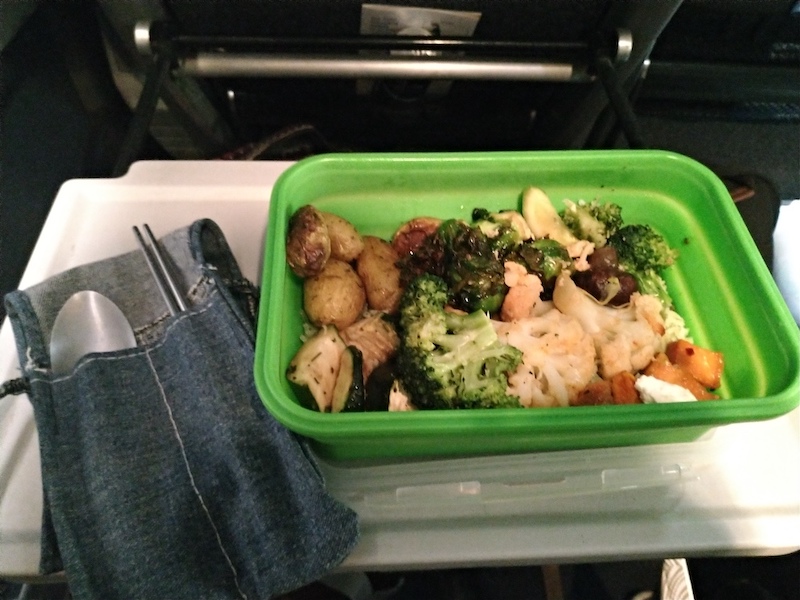
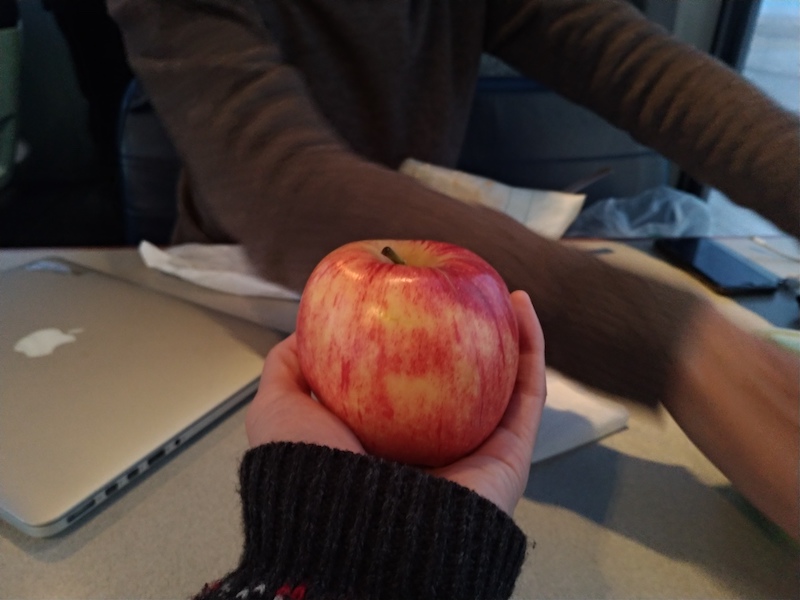
For containers, even though we brought lots of lightweight reusable travel containers and food bags, it still wasn’t enough. So we made use of the food’s natural packaging—like apples, hard-boiled eggs, bananas— to increase volume while reducing container use. We did our best to pack just enough food, and not overdo it. Maybe we should just fast?)
但也承認和懺悔這趟仍然有製造垃圾,理智大腦想得再完美(食物夠吃營養足夠),仍然敵不過當下心情和腸胃渴望熱湯餅乾的慾望(在火車上轟轟三天,嘴很饞),但仍然做到近85%的零浪費達成率了!
But I must confess—we did produce some trash. No matter how well we planned (nutritious and sufficient meals), our cravings and moods eventually took over (after 3 days on the train, you really want some hot soup or snacks). Still, we achieved about 85% zero-waste success!

(Amtrak's snack bar sells instant noodles, mac & cheese, and we reused the empty egg carton to store boiled eggs.)
下面來分享兩趟火車旅程分別準備食物的方法,和餐點分配~~
聖荷西San Jose→西雅圖Seattle(26小時)
從第一天的晚餐到第二天的晚餐,一共4餐。
本來預計第二天下午就到了,結果amtrak遇到延誤。
第一天的便當晚餐為Whole Food Market的自助熟食吧購買,容器為折疊餐盒。
我個人大推折疊餐盒,旅行中非常方便。
下圖除了晚餐便當,其他是第二天的糧食,飲料容器選擇可以回收退瓶的。
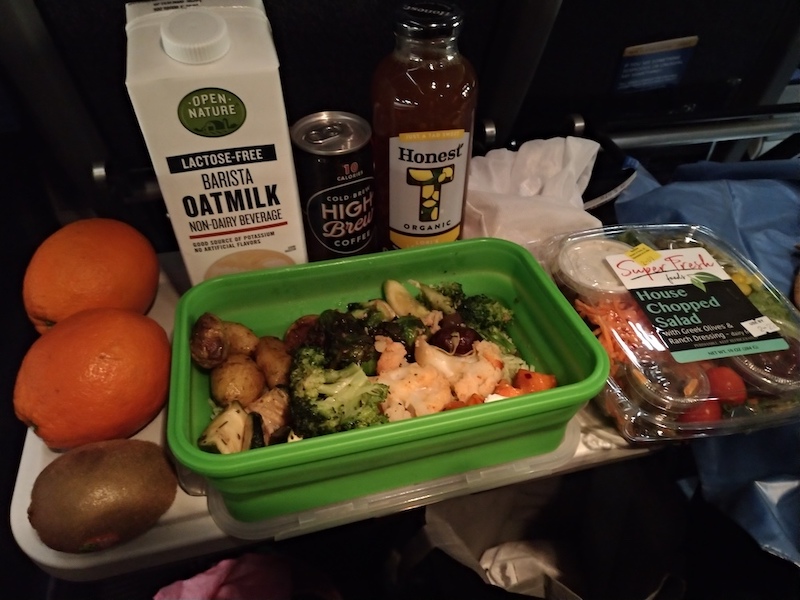
(柳橙、奇異果、熟食便當、燕麥奶、咖啡、果汁、堅果、沙拉)
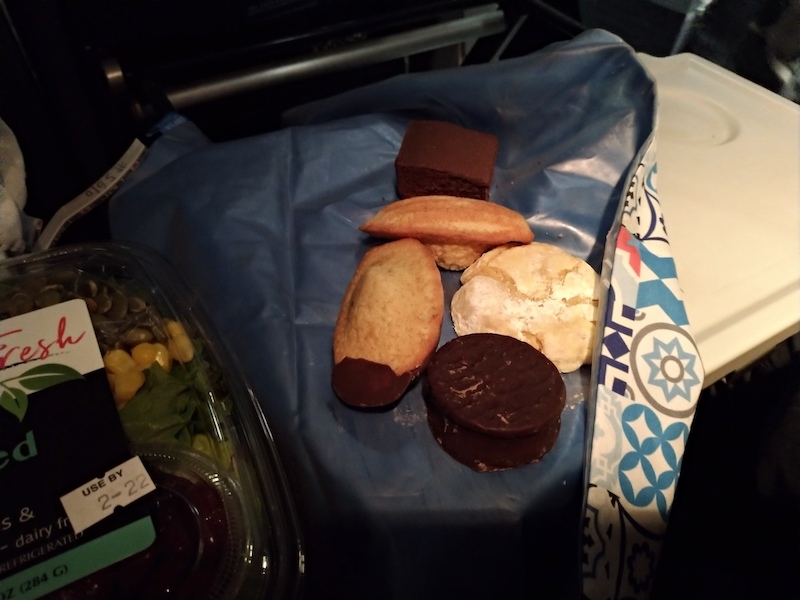
用輕食袋裝了一些蛋糕、麵包、巧克力,早餐或零嘴。輕食袋也是大推的旅行餐袋,很方便裝大份量的麵包蛋糕,還能捲法國長棍。
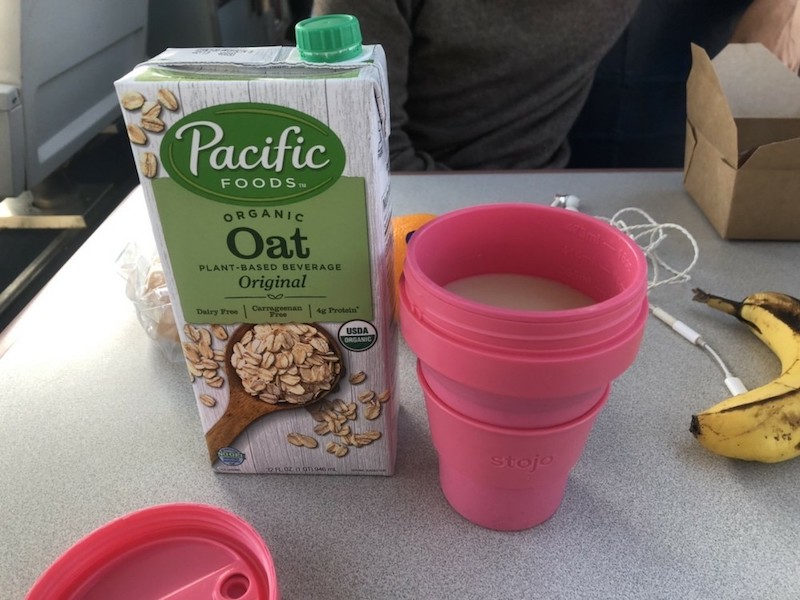
第二天早餐,先喝了點燕麥奶,並吃了一些麵包和香蕉水果。
此杯為折疊攜吸杯,可直接購買咖啡熱飲或當杯子用,小巧方便。
關於文章中環保用品請看:旅行環保餐具一覽表(各式折疊餐盒和餐袋分享)
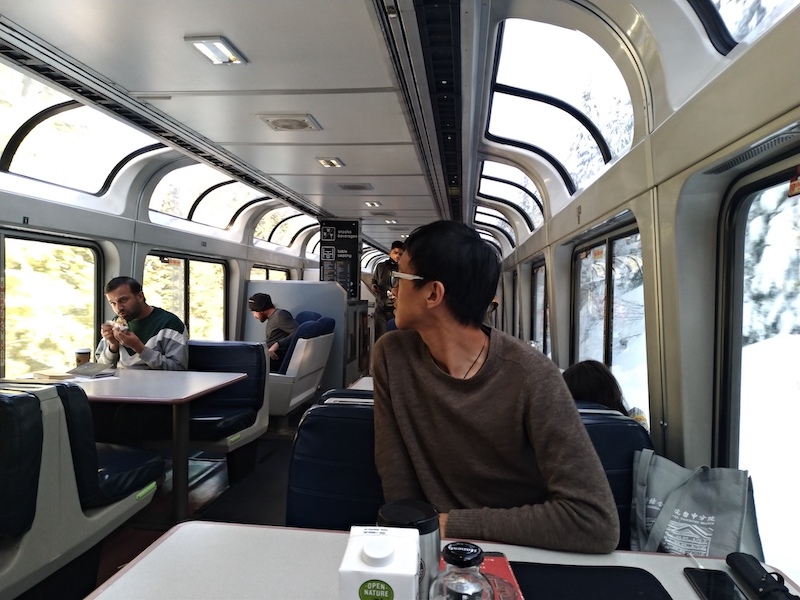
中午繼續吃水果和麵包蛋糕,並配上一瓶果汁。
火車上沒有網路,雖然風景優美也有準備書籍閱讀,仍然會有無聊悶悶的時候,無聊就想找東西吃,喝口果汁吃點零嘴,會是很好的調劑。
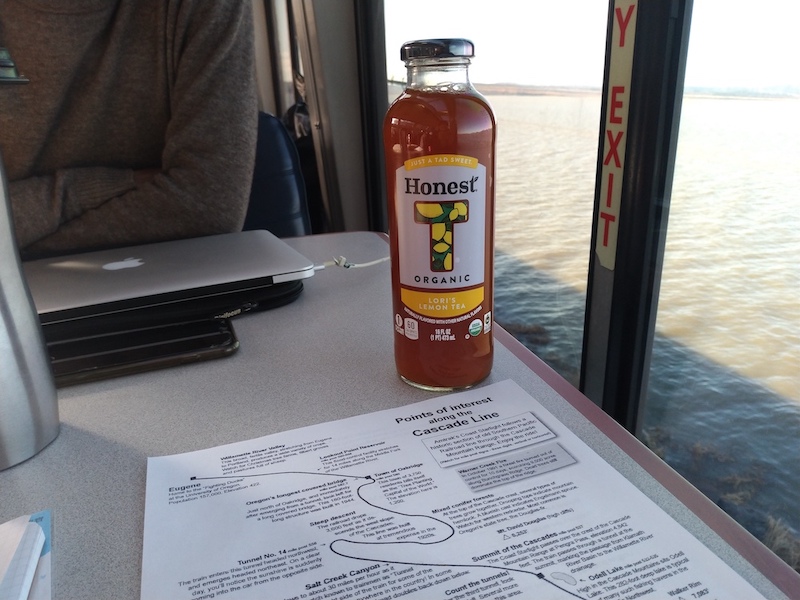
果汁玻璃瓶和咖啡鐵罐皆可回收,不是丟回收筒,是可以拿去店家回收拿回退瓶費的,相對來說會更好的被回收處理(吧?)心中小小期待!
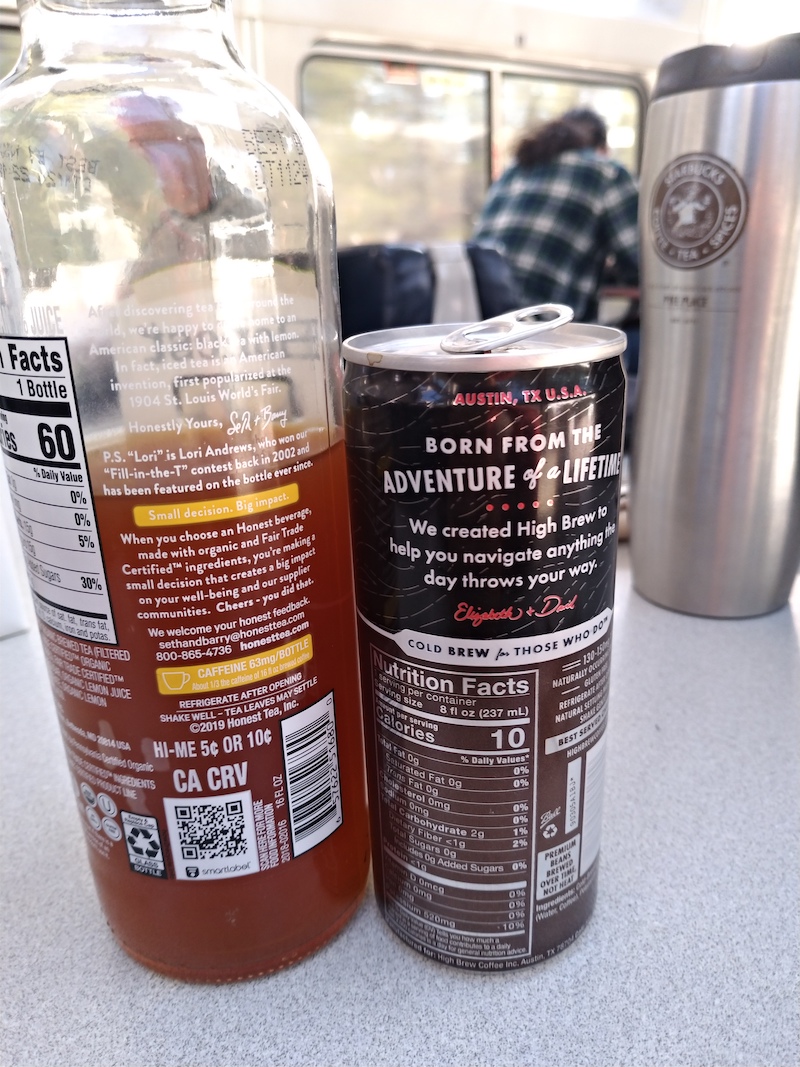
晚餐也是繼續果汁、麵包、水果(蠻無聊的),吃完也就差不多下車了。
第一趟聖荷西San Jose→西雅圖Seattle(26小時)還算順利,也當作是第二趟西雅圖Seattle→芝加哥Chicago(46小時)的練習課。
西雅圖Seattle→芝加哥Chicago(46小時)
從第一天晚上到第三天晚上,一共6餐。
這條路線是橫向跨越美國,兩天內共換了三次時區,是個特別的體驗,睡醒後以為才7點,但其實換時區了已經9點,很奇妙。
這趟旅程的準備更充足,時間更長、旅途更遠,加上第一趟的教訓(食物太單調、零嘴不夠...),西雅圖到芝加哥這段,我們前往商店大採購,做足了準備。
用纖維蔬果網袋購買盛裝各式堅果和水果,燕麥奶必不可少(我的最愛),還追加買了眼罩和巧克力(第一趟忘記買)。
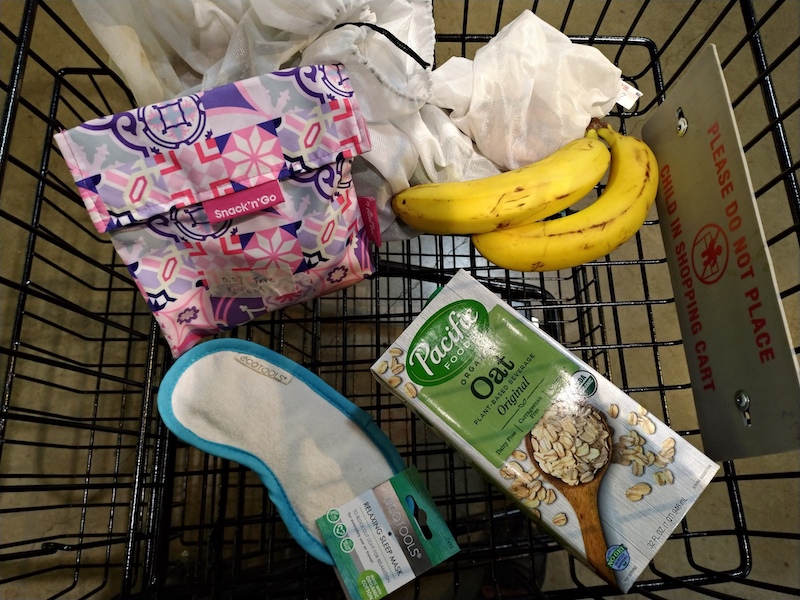
纖維蔬果網袋既透氣又輕便,除了適合買菜買水果外,也很適合裝堅果(但要盡快吃完,因為透氣)。
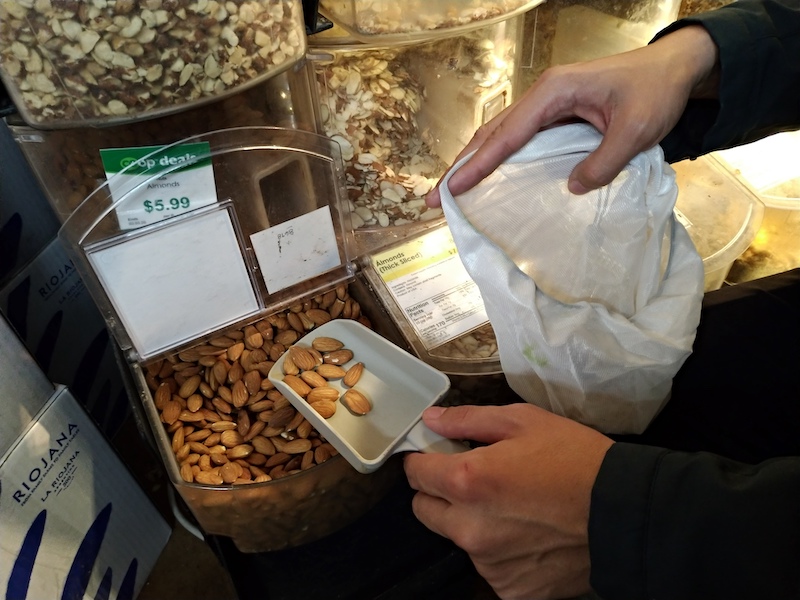
巧克力用零食袋盛裝,還可以先扣掉袋子重量(只需付巧克力的錢)。零食袋介紹看這裡


這趟旅程還多帶了水煮蛋,煮好後不剝殼,放回蛋盒中保存,增加每天早餐的一份蛋白質。
除了兩個大行李箱托運外,兩個後揹包和側背包都裝滿了食物,男友一度背到肩膀快脫臼,一大堆蘋果、堅果、熟食。

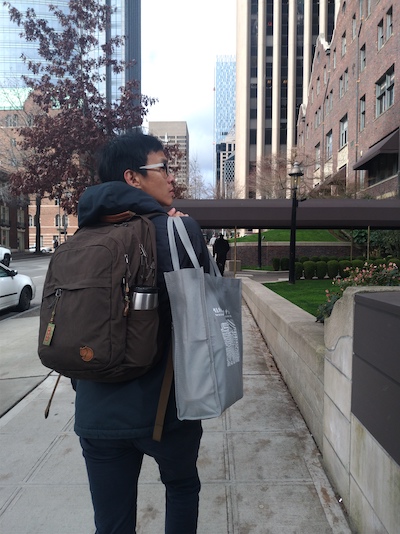
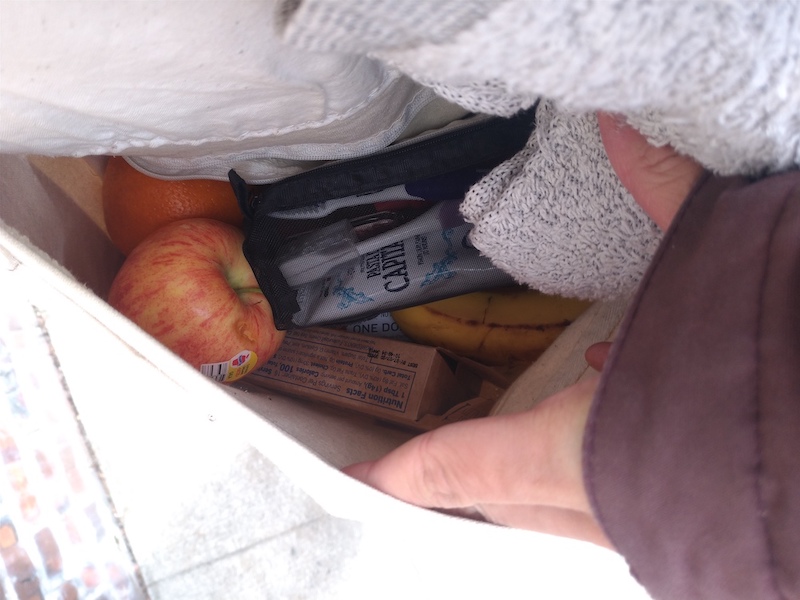
我的側背包除了食物水果,還帶了牙刷和毛巾可以做簡單洗漱。
因為省錢,我們買的坐舖是沒有浴室的,所以兩天火車旅行不能洗澡,僅有廁所可以洗臉刷牙。
還好我們年輕,天氣又夠冷,還不會太難受。
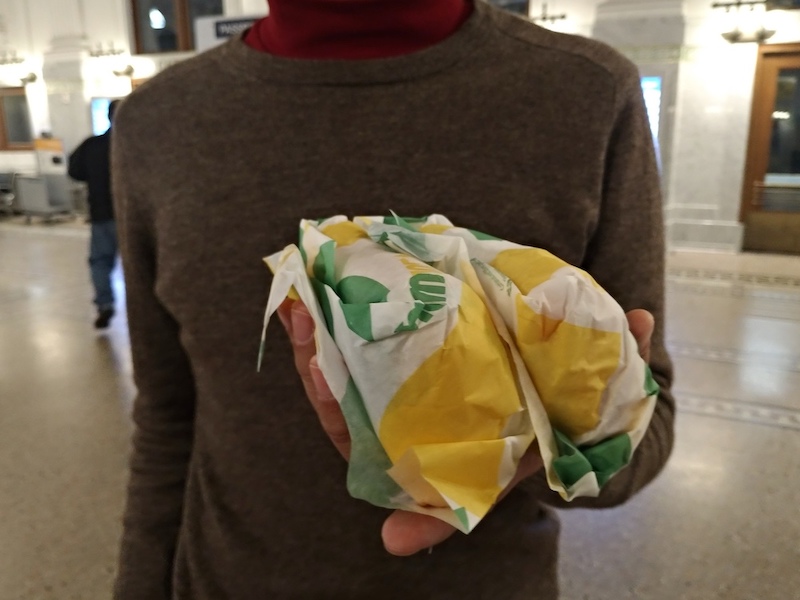
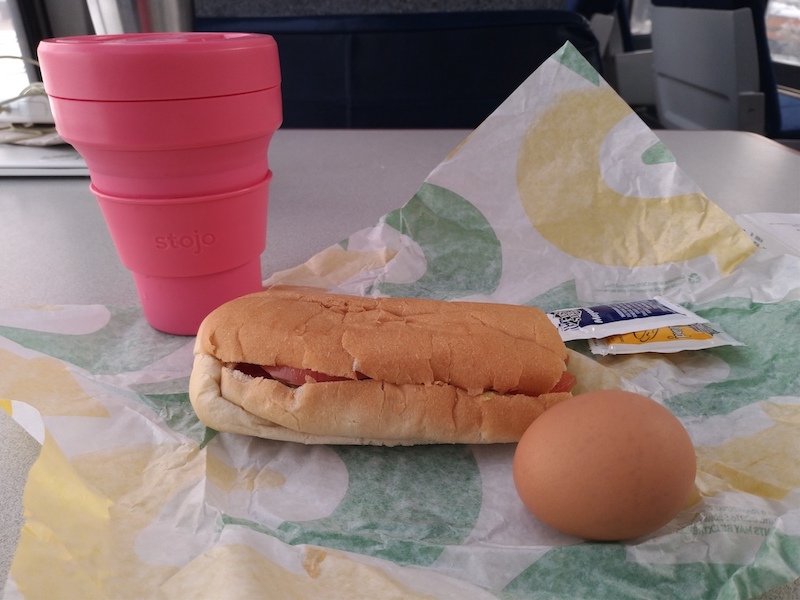
搭車當天,由於火車誤點, amtrak公司提供了subway晚餐給所有乘客,但我們已先吃過晚餐,就留下來當作隔天早餐。(間接的製造了垃圾)
誤點是amtrak的特色了,所以要搭amtrak盡量不要把行程排太緊,你會很崩潰喔!
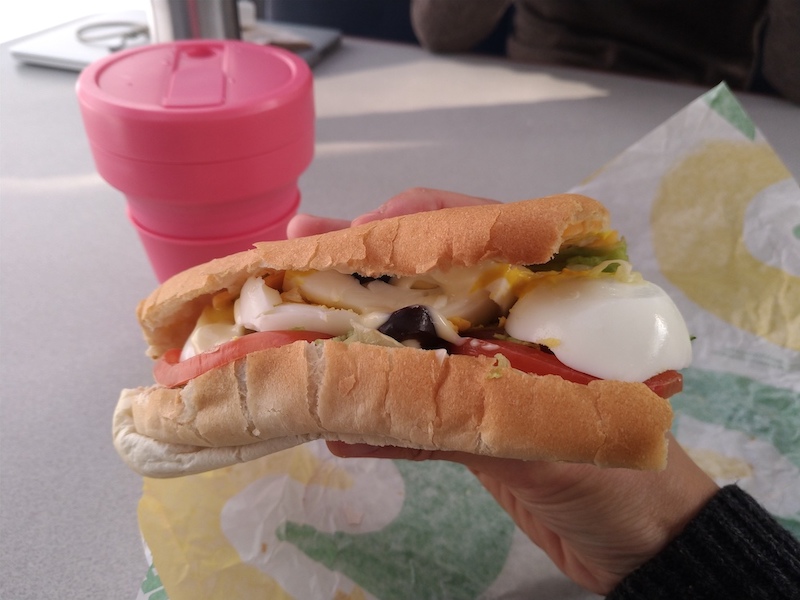
第一天早餐
subway是全素的,將水煮蛋加進去變成蛋沙拉口味,蠻不賴的。再搭配一杯燕麥奶。
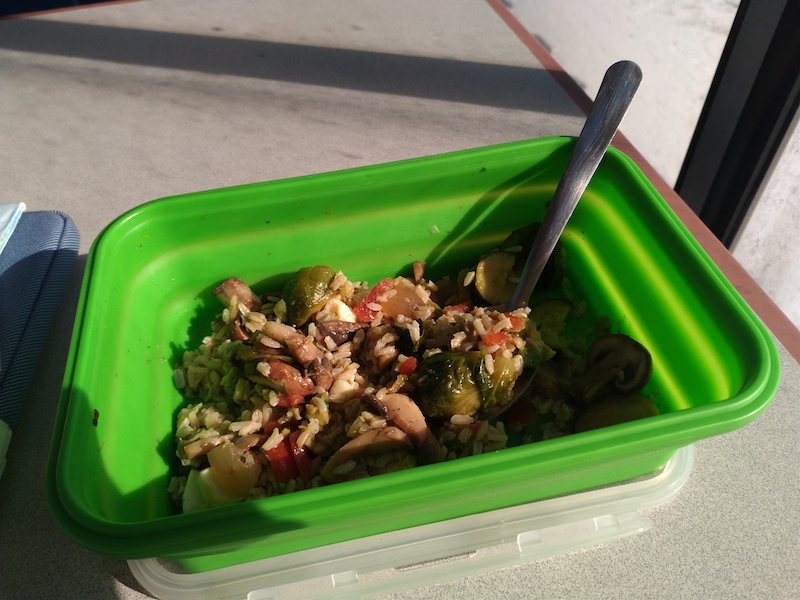
中餐吃男友前一天煮好的熟食,雖然冷掉了,還是不錯吃的。
這部分是我身為台灣小孩的苦惱,我很需要吃熱的食物或湯湯水水,只有沙拉和麵包會覺得腸胃怪怪的,不是消化不良或拉肚子,就是一種「腸胃習慣」吧!
反觀男友因為小時候在美國長大,要他一整天吃麵包和沙拉都沒問題,而我則會懨懨的和不舒服,想想是蠻難搞的,他很特地幫我準備了不少熟食(水煮蛋、便當...)。
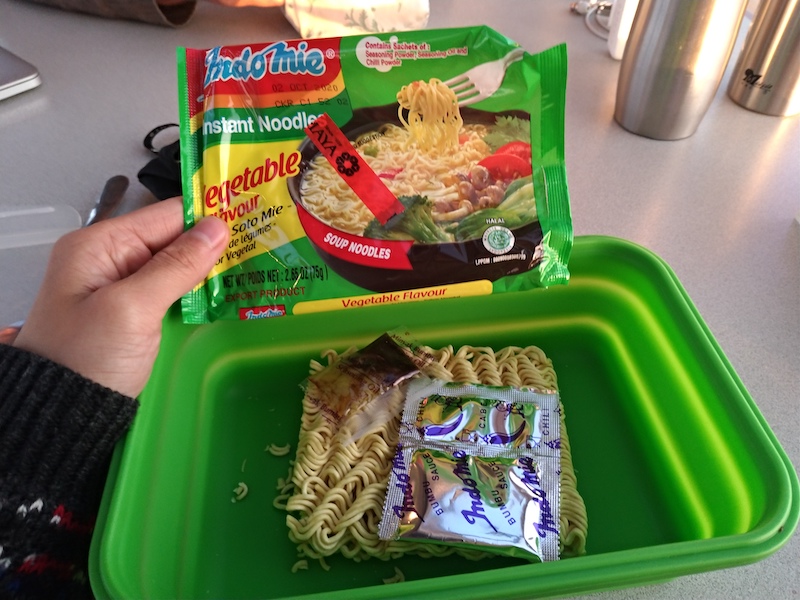
晚餐我吃了一包泡麵(垃圾出現了),男友則吃了麵包和飲料。
我的「腸胃習慣」在歐洲美國都蠻困擾我的,常常到最後「想喝熱湯」的渴望都會訴諸泡麵來滿足。
蠻不健康的,所以只會在沒有廚房可用的情況下才會這麼做。
第二天早餐
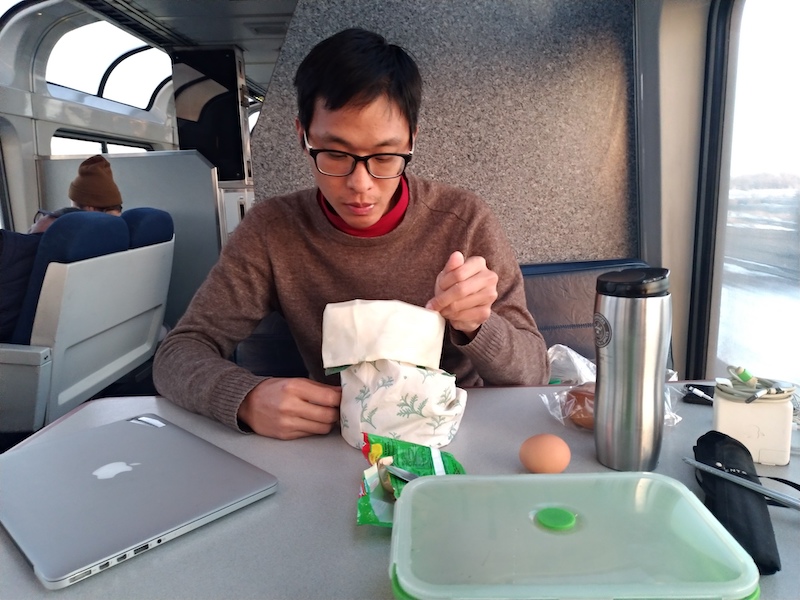
我吃水煮蛋和燕麥奶,配上餅乾麵包。男友吃生菜沙拉,他自己買菜調配而成的,還有麵包水果等等。
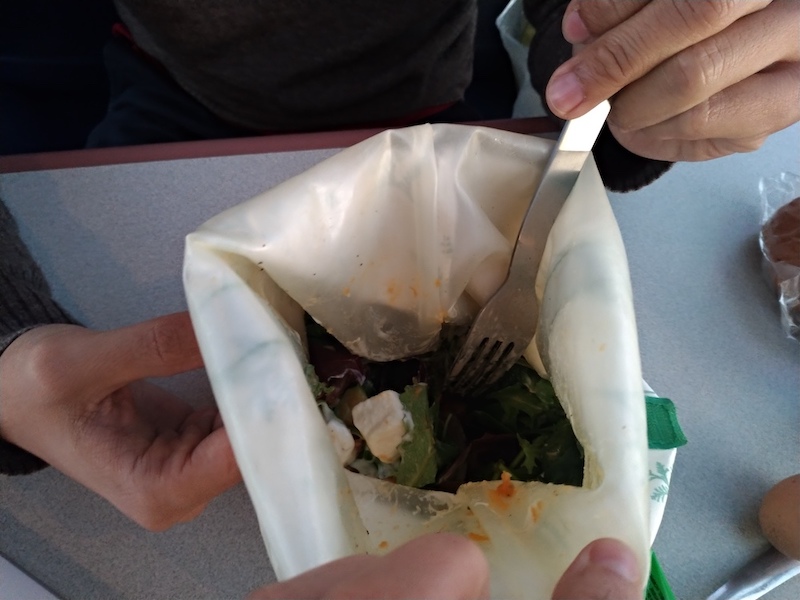
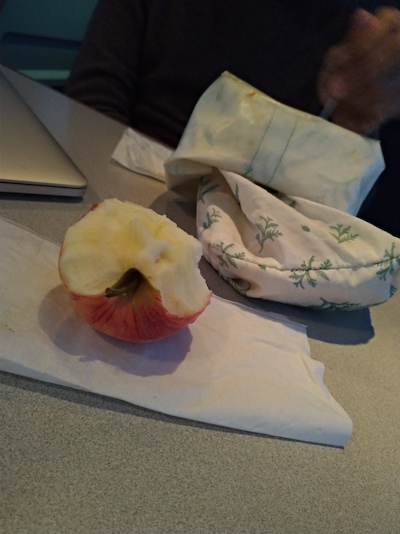
火車預計5點左右到芝加哥,我們的午餐吃得比較簡單,下午吃了不少零食巧克力。
午餐吃了火車販賣部的泡麵和起司義大利麵,因為在特價,加上太需要熱食了(我毛病很多的腸胃)。
整趟旅程除了三餐外,其實也不停的吃各種東西,堅果、巧克力、水果、飲料,當在火車上只能坐著時,嘴巴就特別容易饞。
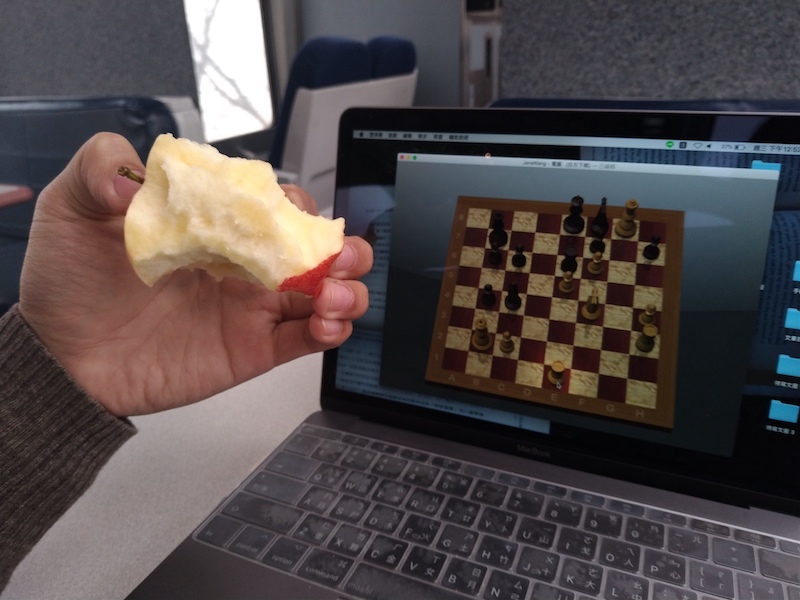
沒有網路,火車上除了聊天看書,我們還玩起了電腦西洋棋,可說是日常生活中少有的斷網時刻,靜靜的看著火車開在銀白色的大地上,是個很新奇的體驗。
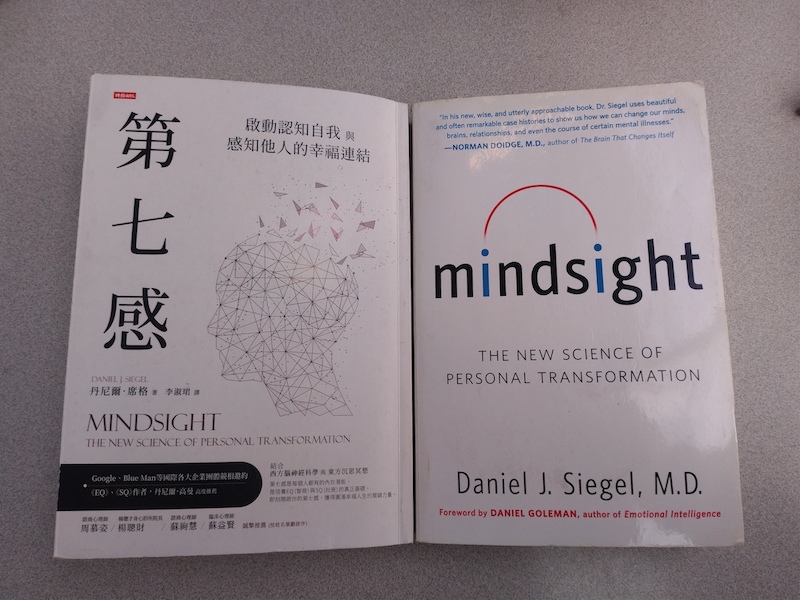
我們看一樣的書,我看中文,男友看英文。
整趟旅程不管是火車環境、斷網、沿途風景都非常棒,很享受火車上的寧靜和緩緩移動。唯獨就是飲食部分沒有到很好,腸胃有點不適應(我太依賴熱呼呼的食物)。雖然幾乎快做到完全零垃圾了,但食物真的有點克難。
下次來美國,還會想再搭一次amtrak的,可以來個南美路線。
Food Prep and Meal Distribution for Each Trip
San Jose → Seattle (26 hours)
From dinner on Day 1 to dinner on Day 2—4 meals total.
We originally expected to arrive in the afternoon of Day 2, but Amtrak was delayed.
-
Dinner on Day 1: We bought cooked food from Whole Foods Market’s hot food bar, packed in a collapsible food container.
Highly recommend collapsible food containers—super convenient for travel.
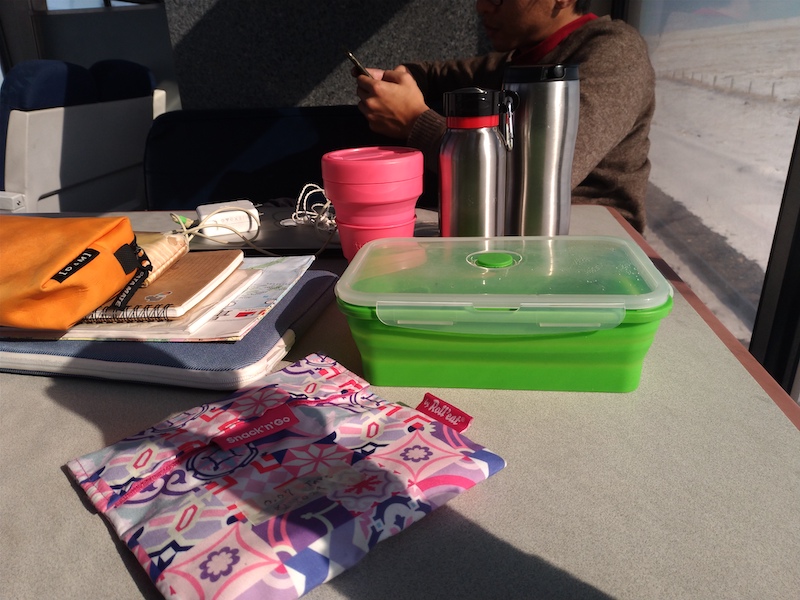
The photo below shows the dinner bento and food for Day 2. For drinks, we used bottles eligible for deposit refunds.
(Oranges, kiwis, cooked meals, oat milk, coffee, juice, nuts, salad)
We used reusable snack bags to pack cakes, bread, and chocolate for breakfast or snacks. These are great for carrying large portions or wrapping baguettes.
-
Breakfast on Day 2: Oat milk, some bread, and bananas.
We used a collapsible cup with a built-in straw—handy for coffee or other hot drinks.
For lunch, we continued with fruit, bread, and cakes, plus a bottle of juice.
Since there’s no internet on the train, even with beautiful scenery and books to read, boredom eventually kicks in—which often leads to snacking. Sipping juice and nibbling on snacks becomes a nice pastime.
The glass juice bottle and coffee can were both refundable containers—not just recyclable but eligible for deposit refunds at stores, making it more likely they’ll be properly recycled (hopefully!).
-
Dinner was once again juice, bread, and fruit—pretty basic, but just in time to get off the train.
This first trip went quite smoothly and served as a practice run for the second, longer journey.
Seattle → Chicago (46 hours)
From dinner on Day 1 to dinner on Day 3—6 meals total.
This route crosses the U.S. horizontally, spanning three time zones in two days, which was an interesting experience. You’d wake up thinking it’s 7 a.m., but it’s already 9 a.m. due to a time change—very surreal.
For this trip, we were better prepared. With more distance, time, and experience (plus lessons learned—like not enough variety or snacks), we went on a big shopping spree in Seattle.
We used mesh produce bags for nuts and fruits, and oat milk (my favorite) was a must-have. We also picked up eye masks and chocolate (which we forgot last time).
Mesh produce bags are breathable and light—great for fruit or nuts (just eat them quickly since they’re exposed to air).
Chocolate was stored in a snack bag, which allows you to deduct the bag's weight when paying—so you only pay for the chocolate itself. (More about snack bags here.)
We also brought more boiled eggs this time. Kept the shells on and stored them in egg cartons—an easy protein addition to breakfast.
Besides two checked suitcases, we had two backpacks and one shoulder bag all packed with food. My boyfriend even said his shoulders were nearly dislocated from carrying so many apples, nuts, and meals.
My shoulder bag held not just food and fruit but also a toothbrush and towel for basic hygiene.
To save money, we bought coach seats (no shower access), so we couldn’t bathe for two days—just used the restroom to wash up.
Luckily, we’re young and the weather was cold enough that it wasn’t unbearable.
See our Amtrak train experience here.
Day-by-Day Meal Plan:
Day 1
Due to a delay, Amtrak gave everyone free Subway sandwiches for dinner. Since we already ate, we saved them for breakfast the next day (unfortunately adding some waste).
Delays are a trademark of Amtrak, so don’t schedule things too tightly—you’ll regret it!
Day 2
-
Breakfast: The Subway sandwich was vegetarian, and we added boiled eggs to make it egg salad—quite tasty. Paired with oat milk.
-
Lunch: My boyfriend’s home-cooked meal from the night before—cold but still good.
As someone from Taiwan, I really need hot food or soups. Just salad and bread upsets my stomach—not quite indigestion or diarrhea, but more of a "digestive habit."
My boyfriend, who grew up in the U.S., is totally fine with salad and bread all day. I, however, get moody and unwell. He was kind enough to prepare warm food for me—boiled eggs, bentos, etc.
-
Dinner: I caved and had a pack of instant noodles (hello, waste), while my boyfriend had bread and a drink.
My craving for hot soup while traveling in the U.S. or Europe often ends with instant noodles.
Not healthy, so I only resort to it when there’s no kitchen available.
Day 3
-
Breakfast: Boiled eggs, oat milk, biscuits, and bread. My boyfriend had a self-made salad, bread, fruit, etc.
-
Lunch: Since we were arriving in Chicago around 5 p.m., we kept it simple and mostly snacked on chocolate.
I had the train’s discounted instant noodles and mac & cheese—couldn’t resist the hot food (again, my fussy stomach).
Throughout the trip, besides the main meals, we constantly snacked—nuts, chocolate, fruit, drinks.
When you’re stuck sitting for hours, your mouth just wants to stay busy.
With no internet, we read, chatted, and even played digital chess.
It was a rare disconnected moment in daily life—watching the train glide across snowy plains was a unique and peaceful experience.
We read the same book—me in Chinese, him in English.
Final Thoughts
The train ride, offline time, and scenery were all amazing. I thoroughly enjoyed the calm and slow pace on the train.
The only downside was the limited diet—my stomach struggled (I rely too much on hot food).
Even though we nearly achieved zero waste, the meals were a bit rough.
Next time I visit the U.S., I’d love to take Amtrak again—maybe try a route through the southern states!
Like our content?
Fuel our journey with a coffee! Every donation helps keep us writing, exploring, and sharing zero waste travel tips, all while sipping from our reusable mugs. Thanks for supporting us we truly appreciate it!